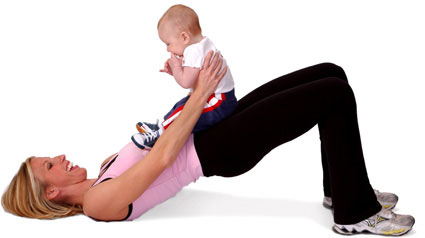
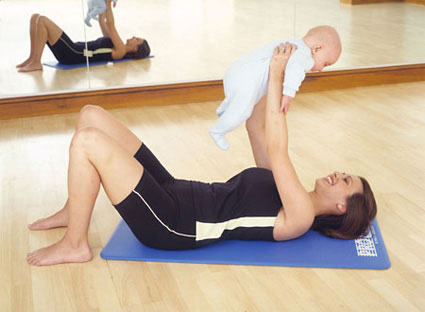
It is imperative that you set aside a time for
doing yoga, because unless you do so, you may never find the time. It may be
hard setting aside a fixed time initially, but once you establish a routine your
baby will get used to it as well.
You will need: comfortable clothing, a mat, some
soothing music to calm your baby so he can be with you while doing your yoga,
and a peaceful room.
It may hurt to sit on the floor, so seat
yourself on a small cushion.
Start by chanting 'Om' around three to five
times. Babies love to say Om with you, so encourage them. It doesn't matter
whether they say it or not, just let them feel the vibrations. Inhale, stretch
the 'Om' for as long as you can while exhaling.
Practice deep breathing. Close your eyes. Inhale
while expanding your stomach and chest, and exhale while pulling your stomach
in. Imagine that you are trying to touch your navel to your spine. This is
called abdominal breathing, and is incredibly beneficial. Practice this on a
daily basis, and your paunch will vanish before long. This also tightens
abdominal muscles and makes them strong and supple. Feel the oxygen rush
through your body. The best part about abdominal breathing is that you can
practice it even while nursing your baby.
Stand up with your feet as close together as feels
comfortable. Your pelvic structure would have been altered after giving birth,
and you may not be comfortable standing with your feet together in the first
few months post-pregnancy. Keep them shoulder width apart, and keep bringing
them closer together gradually over a period of time. By six months, your feet
should be touching.
Rotate your hands in a circular motion,
backwards and forwards. This not only strengthens arms and shoulders, but also
helps lift breast tissue.
Stand up straight. Close your eyes and INHALE.
Drop your chin so it touches the centre of your neck. This is known as
jalandhar bandh. Then, practice moolbandh by pulling up your vaginal muscles as
if you are trying to stop the flow of urine midstream. Pull up your vaginal and
pelvic muscles and hold the position for around six seconds and release, while
gradually exhaling. Slowly, lift up your chin and open your eyes. Try and
increase the duration of this bandh. This tightens vaginal muscles, which would
have loosened after giving birth.
If you have had a normal delivery, this is one
asana you can practice the very next day. This helps bring the pelvic back to
its normal position and also corrects uterine retroversion. As a result, this
is especially recommended after pregnancy. Get down on all fours, balancing on
your knees, feet and palms. Your torso should be parallel to the floor. Slowly,
INHALE, push your stomach down and lift your shoulder blades up, bringing them
as close together as you can. Lift up your head. Exhale and release, getting
back to normal position.
Gradually, as time elapses, you can get back to doing
some regular asanas. Till then, just do a few of the very basic ones, along
with breathing. Finish off your session with another 'Om'
chanting.
Sorry. Due to our site's regulations and policies, your message has not been posted. Our moderating team has been notified about your message. If the message is found to be genuine and still did not get posted, you may not post the message again as it will automatically get posted for you within 24hrs time (excluding weekends).
- The Indiaparenting Team